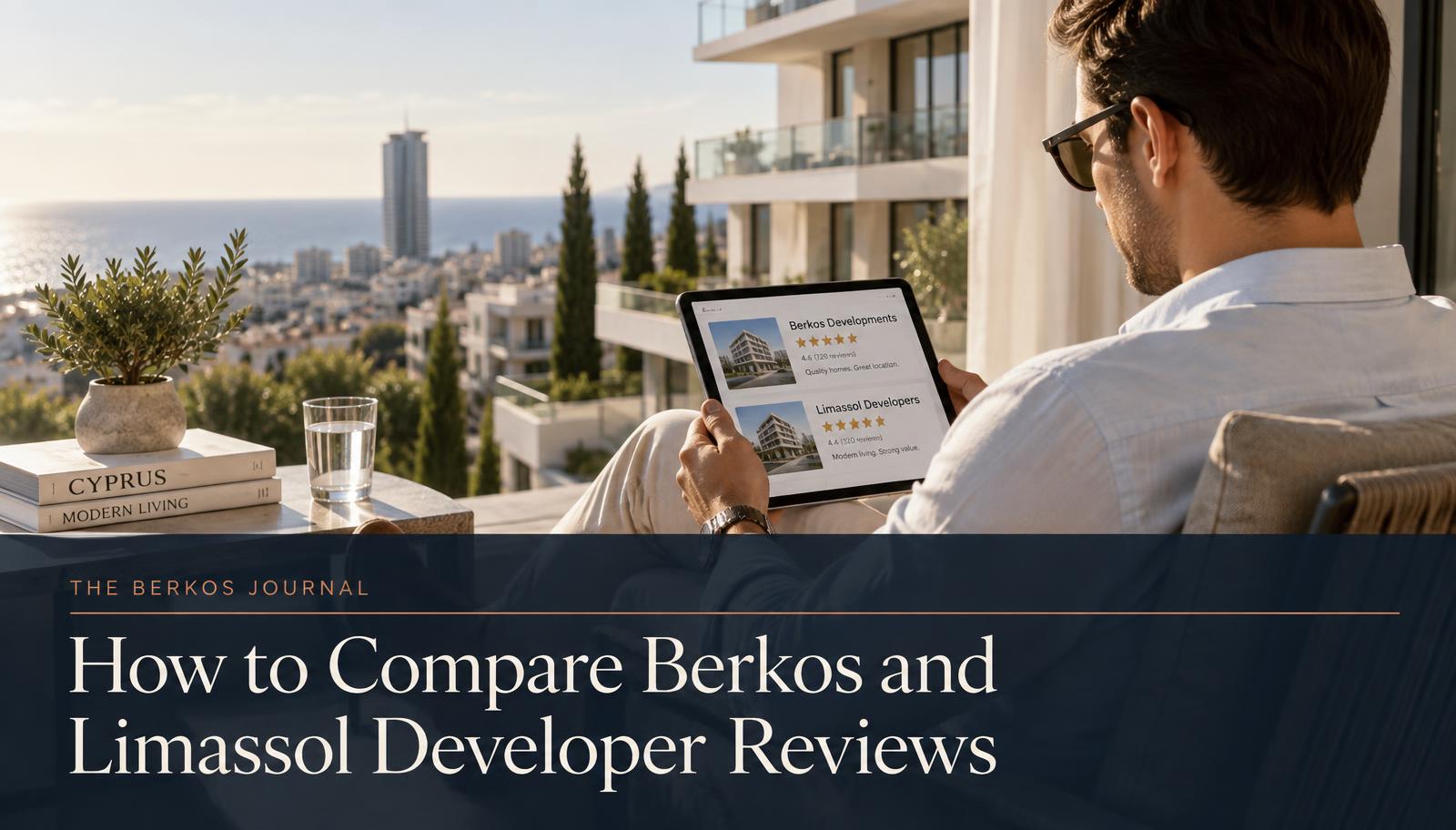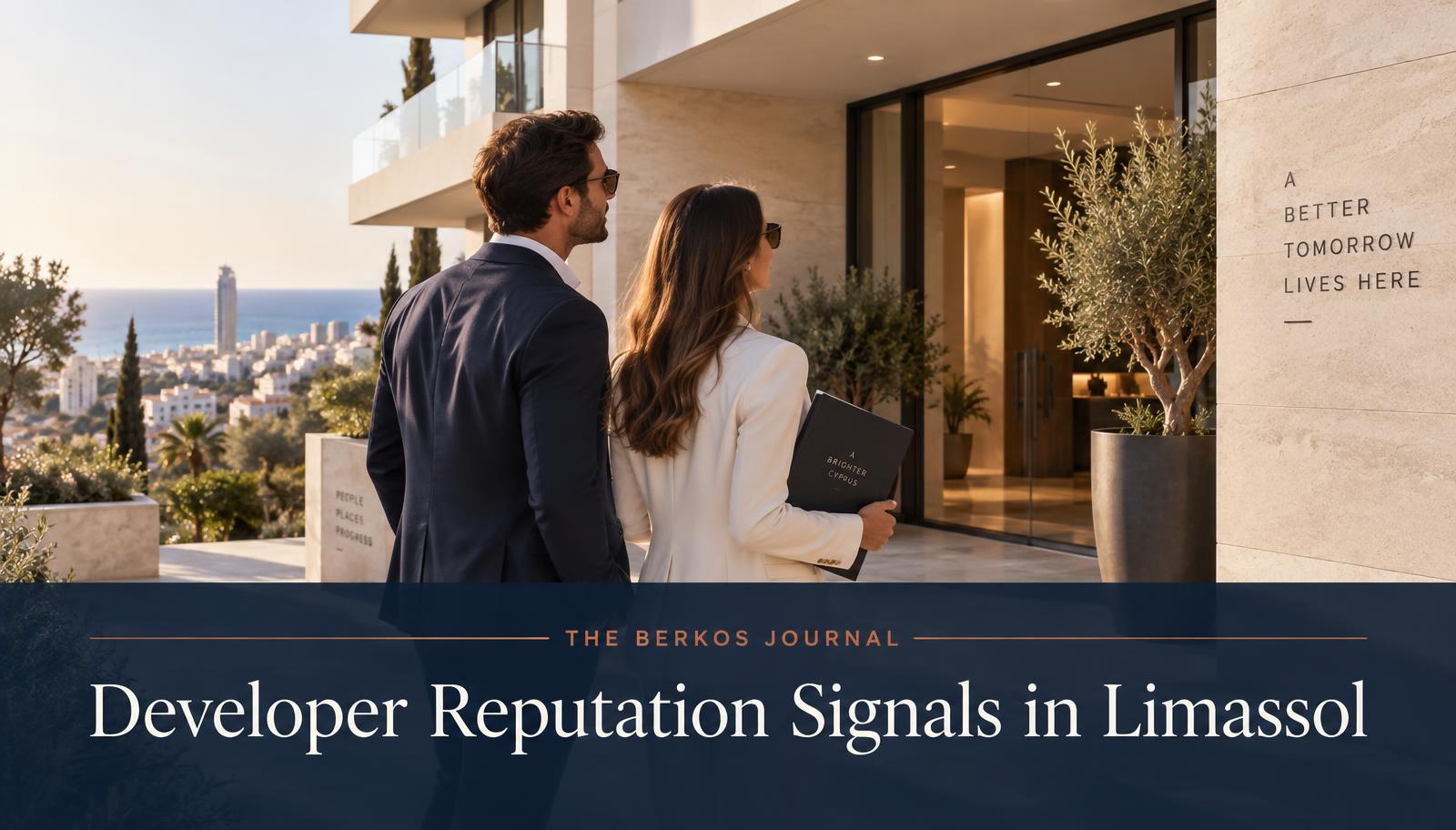
The developer reputation signals that matter most in Limassol are verifiable completed work, clear project documents, consistent communication, defined responsibility, an organised handover process and a written after-sales scope. Reviews can help identify questions, but they should not replace checks on the exact developer, project and unit.
The strongest signal is consistency: what the developer says should match the documents supplied, the process followed and the property ultimately delivered. Buyers should combine that evidence with independent legal and technical advice appropriate to the transaction.
Treat reputation as evidence, not a rating
A rating compresses different experiences into one number. One reviewer may be commenting after a sales meeting, another during construction and another several years after handover. Their observations can all be genuine while describing very different parts of the process.
Read reviews to find recurring themes about communication, documentation, changes, workmanship or after-sales support. Then turn each theme into a question that can be checked against the project you are considering.
Inspect completed projects
A completed development gives buyers something tangible to examine. Where access is appropriate, look beyond the entrance and staged photography. Consider the common areas, visible finishes, doors and windows, external surfaces, parking, storage and general maintenance.
Ask when the project was completed and whether it is comparable in size, design and construction type to the proposed purchase.
An independent technical adviser can help define what can reasonably be assessed through a visual inspection and which matters require drawings, tests or specialist investigation.
Compare marketing with the written documents
Reputation becomes more meaningful when the sales presentation is supported by clear documents. Request the current plan for the exact unit, the written specification, confirmed inclusions and available project information.
Check whether parking, storage, balconies, roof areas and rights over shared spaces are described consistently. Identify which finishes, equipment and building systems are included, optional or still subject to selection.
Broad terms such as “premium quality” do not define delivery. Specific descriptions, identifiable drawing revisions and a written substitution process are more useful.
Test communication before committing
Test responsiveness with a real document request. Ask who the main contact will be and how questions or decisions are recorded.
A useful answer identifies the current document, responsible person and next step. If information remains pending, the developer should distinguish it from confirmed information rather than present an estimate as final.
For an overseas buyer, also confirm how progress updates, buyer selections, approvals and revised drawings will be shared. Important decisions should leave a clear record that the buyer and advisers can review later.
Understand who is responsible for each stage
The relevant question is not whether every function is performed in-house. It is whether responsibility is clear and coordinated.
Ask who is responsible for architecture, engineering, construction, supervision, buyer communication, contract information, snagging and after-sales matters. Where outside professionals or contractors are involved, establish who manages their work and who answers the buyer’s questions.
A clear responsibility map reduces confusion. It does not replace the buyer’s independent lawyer or technical adviser, whose roles should remain separate from those of the seller and project team.
Look for construction and change-control evidence
Good reputation claims should connect to the way quality is managed. Depending on the project stage, ask which site records, product information, inspection notes, test results or photographic updates are available.
Also ask how design changes, product substitutions and buyer-requested variations are proposed and approved. The process should identify the affected document, price or programme where relevant and record the agreed decision.
Review handover and after-sales separately
A developer can communicate well during sales and still have an unclear handover process. Ask when the exact unit can be inspected, how incomplete or defective items will be listed, who coordinates corrections and how completion is checked.
The handover plan should identify the keys, access devices, meter information, equipment instructions and available warranties to be supplied. The buyer’s lawyer should explain any legal steps that are separate from physical handover.
After-sales support should also be defined in writing. Confirm the contact point, reporting method, included tasks, exclusions and any time or cost limits. If property management is offered, compare it as a separate service with its own responsibilities and fees.
Check reviews in context
Use reviews as leads for further investigation rather than as final proof. Consider:
- Whether the reviewer identifies a specific project or property type.
- Which stage of the transaction the review describes.
- Whether the point concerns sales, construction, handover or ongoing management.
- Whether the developer responded with specific information or a generic statement.
- Whether the same issue appears consistently across independent sources.
Do not dismiss one negative review automatically, and do not treat several positive reviews as a substitute for documents. Ask the developer about material concerns and assess the evidence supplied.
Use independent verification
The developer supplies project, unit, price and delivery information. The buyer’s lawyer reviews ownership, contract terms and transaction-specific legal matters. A technical adviser can review plans, construction or condition within the agreed scope.
Keep those roles distinct and confirm whose interests each professional represents.
Limassol developer reputation scorecard
| Signal | Evidence to request | What to record |
|---|---|---|
| Completed work | Comparable finished projects | Age, condition and relevance |
| Documentation | Current plans, specification and inclusions | Confirmed, pending or inconsistent |
| Communication | Named contacts and update process | Response quality and next step |
| Responsibility | Project roles and coordination structure | Who owns each decision |
| Quality control | Relevant records, tests and change process | Available evidence and reviewer |
| Handover | Inspection, snagging and correction procedure | Timing and responsibilities |
| After-sales | Written support or management scope | Inclusions, exclusions and fees |
Questions to ask a Limassol developer
- Which completed project is most comparable to this one?
- Which plans and specification apply to the exact unit?
- What is confirmed, and what remains provisional?
- Who is responsible for each stage and buyer decision?
- How are revisions, substitutions and selections recorded?
- Which construction and quality records can be reviewed?
- What happens during inspection, snagging and handover?
- What support is available after handover, and what is excluded?
- Which points should independent advisers verify?
Discussing a Berkos property
Buyers considering a Berkos property can request the available plans, written specification, confirmed inclusions, price information and project-stage documents for the relevant unit. The same evidence-based review should be applied to Berkos and any other developer being considered.
Independent legal and technical advisers should confirm the matters within their expertise before the buyer signs or commits funds.
Conclusion
The most useful Limassol developer reputation signals are the ones a buyer can test. Inspect relevant completed work, compare marketing with current documents, assess communication and responsibility, and review the construction, handover and after-sales processes.
Reviews help reveal questions. Consistent evidence provides the stronger answer.
BERKOS Team
BERKOS is an integrated real estate group in Limassol, Cyprus, covering development, construction, property management and the legal and financial work around them.