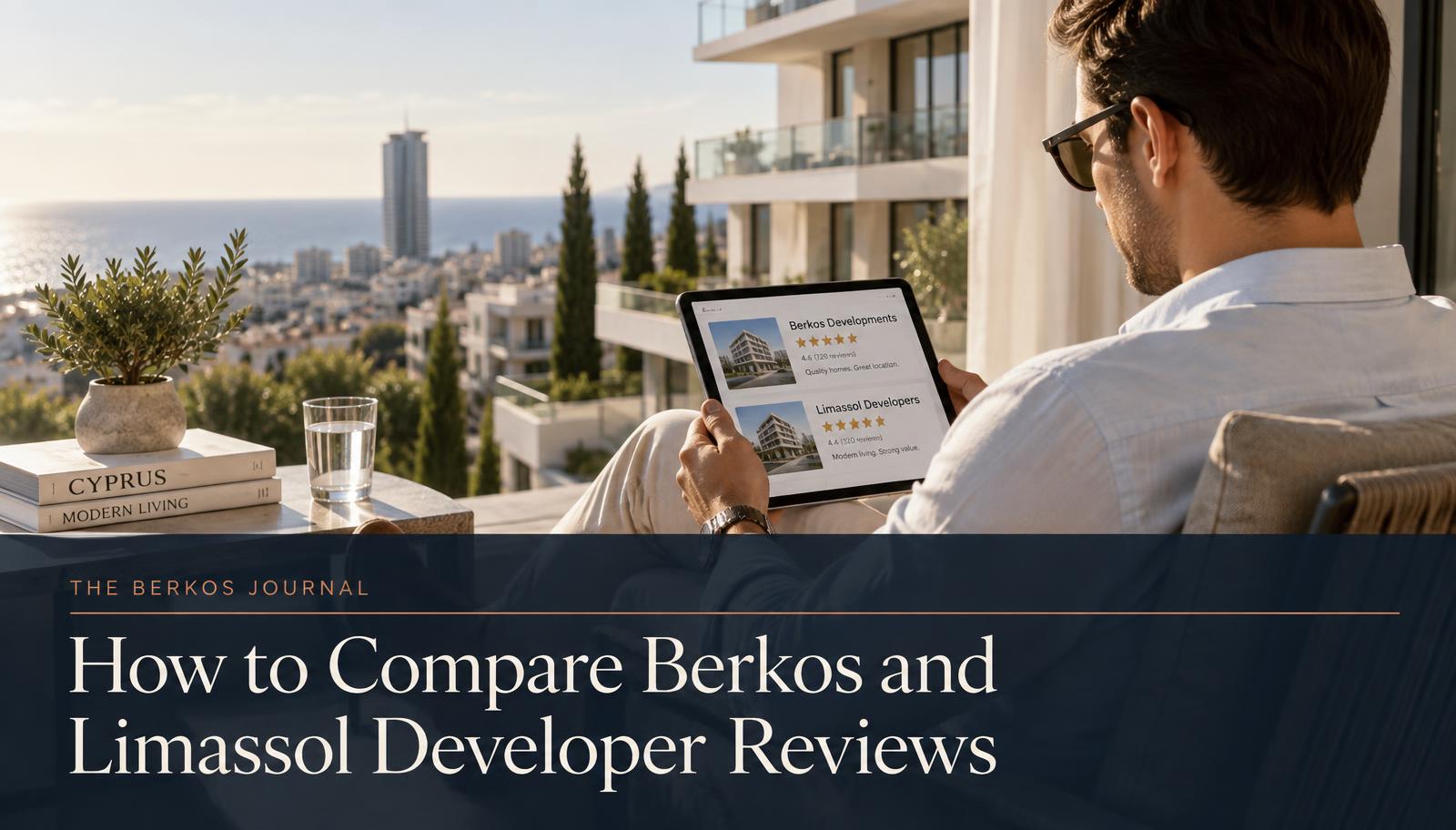
Non-resident buyers should compare Limassol developers on three areas: transparency, communication and the exact scope of purchase assistance. The strongest evidence comes from written prices, plans, specifications, project updates, named responsibilities and a clear handover process.
Do not rely only on renders, general promises or the length of a service list. Ask every shortlisted developer for the same information so that the comparison is consistent.
1. Compare pricing and scope transparently
Start with the quoted property price and ask what it includes. Two similar prices may cover different specifications, spaces, services or payment arrangements.
Request a written breakdown covering, where relevant:
Tax, legal and transaction costs depend on the buyer and the property. Ask an appropriately qualified independent professional to confirm how they apply to your situation.
2. Review the project information
A transparent developer should be able to identify the information available for the project’s current stage.
Ask for:
Early-stage projects may not have every detail finalised. That is not automatically a problem, but preliminary information should be distinguished from confirmed information.
3. Assess communication before reserving
Communication is particularly important when the buyer cannot visit the site regularly.
Before making a commitment, establish:
Ask for an example of a previous progress update with confidential details removed. This provides a better indication of the reporting style than a general promise of regular communication.
4. Define the scope of purchase assistance
“Purchase assistance” can describe very different services. One developer may coordinate project documents and handover. Another may also introduce external legal, banking, tax or property-management professionals.
Request a written scope showing:
A coordinated introduction is not the same as independent advice. Buyers should confirm the role and independence of any lawyer, tax adviser, finance provider or other professional involved.
5. Examine support during construction
For a property that is not yet complete, ask how the developer manages information between reservation and handover.
Buyer selections
Confirm which finishes or fittings can still be selected, the deadline for each decision and whether any option changes the price or programme.
Project changes
Ask how approved changes to plans, specifications or materials will be communicated. The record should identify what changed, why it changed and whether it affects the property, cost or timing.
Progress reporting
A useful update should distinguish completed work, current activity, upcoming stages and decisions required from the buyer. Photographs are useful, but they should have enough context to explain actual progress.
6. Review snagging and handover arrangements
Handover is a process rather than only the moment when keys are delivered.
Ask the developer to explain:
Depending on the project and agreed scope, handover information may include available specifications, warranties or operating details for installed items.
7. Check the developer’s track record
Marketing material shows the intended positioning of a project. It does not, by itself, prove how the development was managed.
Where appropriate, review completed and active projects and ask:
Public reviews can provide useful signals, but they should be considered alongside project documents and direct evidence. A small number of reviews may not represent the experience of every buyer.
Limassol developer comparison checklist
| Area | Evidence to request |
|---|---|
| Price | Written inclusions, exclusions and payment stages |
| Property | Current plan, areas and written specification |
| Project status | Development stage, relevant approvals and estimated programme |
| Communication | Named contact, channels and update frequency |
| Construction updates | A sample report and explanation of milestones |
| Changes | Written approval and notification procedure |
| Purchase assistance | Included services, exclusions, charges and third-party roles |
| Handover | Inspection, snagging, documents and outstanding-item process |
| After-sales | Scope, contact method and responsibility |
Warning signs for non-resident buyers
Pause and request clarification if you encounter:
A missing answer does not always indicate a serious problem. However, it is information that should be resolved before the buyer relies on it.
Questions to ask every shortlisted developer
Discussing a Berkos project from overseas
The applicable assistance and after-sales scope should be confirmed for the specific property rather than assumed from a general description.
Conclusion
Limassol developers should be compared on documented processes as well as the properties they offer.
Clear pricing, current project information, structured communication, a defined assistance scope and an organised handover process make it easier for a non-resident buyer to understand responsibilities and identify unanswered questions before purchasing.
BERKOS Team
BERKOS is an integrated real estate group in Limassol, Cyprus, covering development, construction, property management and the legal and financial work around them.