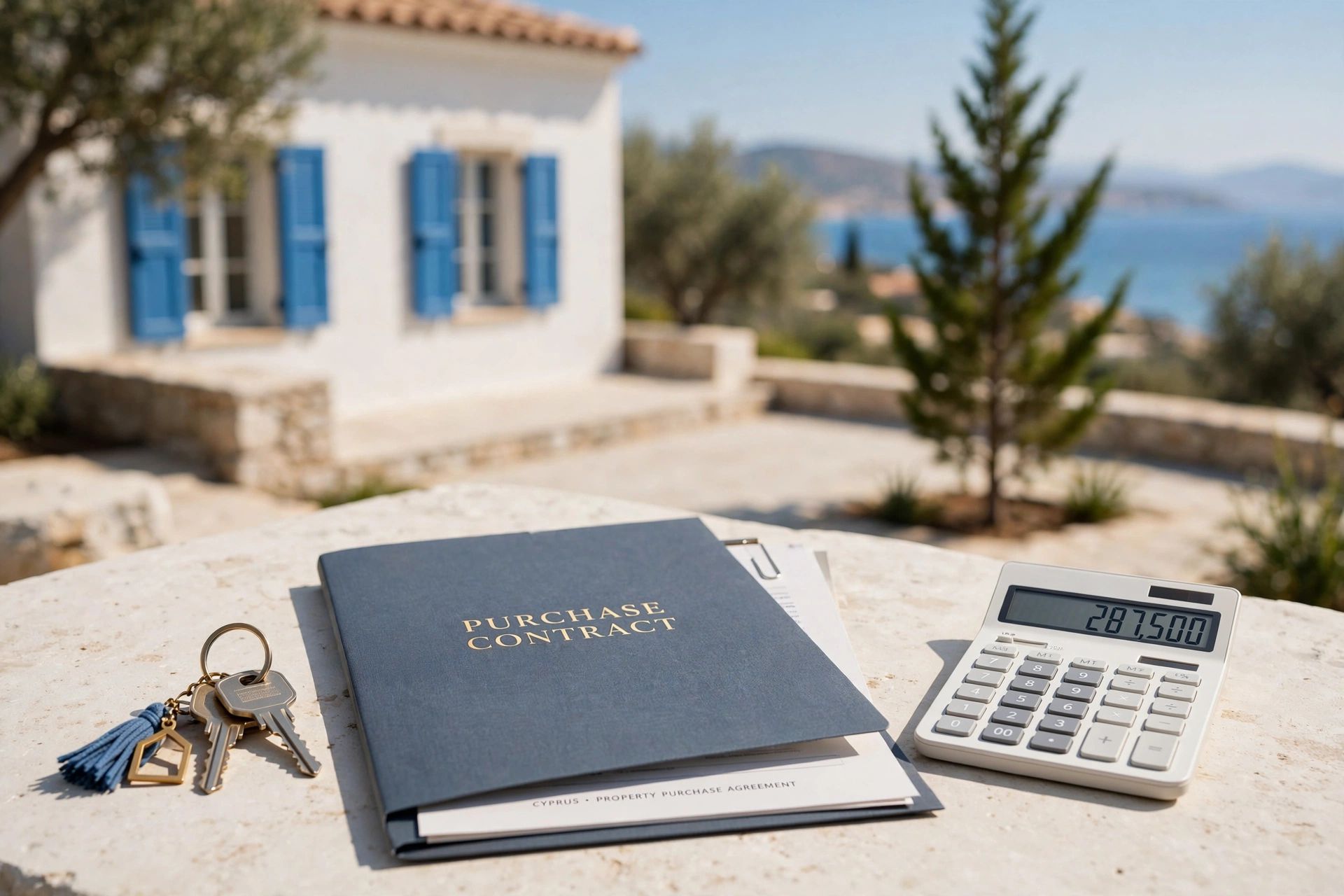
What changes in Cyprus property tax take effect in 2026
If you are buying property in Cyprus in 2026, the most direct change is the end of stamp duty on contracts executed from January 1. That removes one contract-stage charge, but it does not make every purchase tax-free. VAT and transfer fees may still apply, depending on the property and transaction.
When the end of stamp duty applies
The key date is when the sale contract is executed. Contracts signed from January 1, 2026 fall under the abolished stamp duty framework. A stamp duty guide explains why a contract signed before that date may need separate review.
Which property transactions are covered
The change concerns stamp duty on property sale contracts. It does not remove VAT from qualifying new-property purchases or transfer fees that may arise when title is transferred. Each charge has its own trigger, so consider them separately.
How to confirm the rules for a purchase signed before 2026
If you signed in 2025, do not assume that a later filing or completion date moves the contract into the new rules. Ask your Cyprus lawyer to check the executed document, its date, and any applicable transitional provisions.
Why the contract date and filing date may matter
Execution date is central to the stamp duty change, while contract filing can be relevant to later registration steps and calculations. Keep evidence of both dates and ask your adviser to confirm how they affect your specific purchase.
How the end of stamp duty affects buyers
Removing stamp duty can simplify the contract stage and reduce one line in your purchase budget. It is only one part of the total cost, though; legal work, VAT, transfer fees, and other transaction expenses should still be considered.

What stamp duty previously applied to
Stamp duty was a documentary tax that could apply to property sale contracts. Buyers encountered it around signing and filing, adding a charge and an administrative step before the transaction proceeded.
How removing the charge may change transaction costs
For a contract executed in 2026, removing stamp duty means you can exclude that charge from your estimate. The saving depends on the old calculation for the particular contract; it does not predict the total cost of buying.
Which documents and deadlines buyers still need to manage
Even without stamp duty, you still need to meet contract, payment, and registration deadlines. Keep signed agreements, proof of payments, and communications together, and have your legal adviser confirm what must be filed and when.
How to update a purchase budget without overlooking other fees
Build your estimate around costs that remain, rather than treating the change as a broad tax reduction. A property buying costs guide can help you compare the expenses involved in new-build and resale purchases.
How Cyprus VAT rules apply to property purchases
VAT is most relevant when you buy a new property, while a resale generally follows a different tax path. The rate and eligibility for any reduced treatment depend on the facts of the purchase. Confirm the position for the specific home before agreeing a final price.
When the standard VAT rate applies to a new property
The standard VAT rate is 19% and generally applies to a new property sold by a developer, subject to the details of the transaction. Do not assume every property described as new has identical VAT treatment; ask for written confirmation.
Who may qualify for the reduced rate on a primary residence
A reduced 5% rate may be available for an eligible primary residence. It is not automatic: your intended use and the applicable conditions matter, so confirm eligibility with a Cyprus tax professional before relying on it in your budget.
How property size, value and use can affect eligibility
Eligibility can depend on property characteristics, including its size and value, as well as whether it will serve as your primary home. Ask your adviser to assess the current criteria against the exact property and your circumstances.
What buyers should verify before signing a contract
Request the proposed VAT treatment and price breakdown in writing. Check what happens if an application for reduced VAT is not accepted, who handles any required filings, and whether the contract clearly assigns those responsibilities.
How VAT and transfer fees interact
VAT and transfer fees are separate charges, but the VAT status of a purchase can affect whether transfer fees are payable. This distinction is useful when comparing a resale with a new build. Confirm the assumptions with your conveyancer before treating either estimate as final.
When transfer fees may apply to a resale or new-build purchase
Transfer fees may arise when title is transferred, particularly for a purchase not subject to VAT. Where VAT is paid on a purchase, transfer fees are generally not charged; confirm how the rule applies to the specific property.
How VAT treatment can affect transfer fee calculations
For a transaction not subject to VAT, transfer fees may be reduced by 50%. Where VAT is paid, transfer fees are generally not payable. The practical difference can be significant, so compare the tax basis, not just the asking price.
Which exemptions or reduced rates may be available
The 50% reduction is relevant to qualifying transactions that are not subject to VAT. Reduced VAT may also be available for an eligible primary residence. These are distinct rules, and you should not assume both apply to one purchase.
How to compare the total cost of different properties
A simple comparison helps show why the property type and VAT position matter. Treat this as a starting point, then ask your adviser to confirm the exact assessment and any other costs.
Purchase type | VAT position to check | Transfer fee point |
|---|---|---|
New build | Standard rate or eligible reduced rate | Generally not charged where VAT is paid |
Resale | VAT generally does not apply | A 50% reduction may apply |
Either, contract executed in 2026 | Confirm transaction-specific treatment | Stamp duty on the contract is abolished |
The table highlights the usual distinction, not a substitute for a transaction-specific calculation. Ask for each cost to be shown separately so you can compare the full amount due at each stage.
How the changes affect different types of buyers
Your intended use of the property can shape the tax questions to ask. A primary residence, resale home, holiday property, or company purchase may not receive the same treatment. Start by explaining who will own and use the property to your adviser.
Buying a newly built home as a primary residence
If you are buying a new home to live in, check whether you meet the conditions for reduced VAT. BERKOS coordinates planning, engineering, construction management, and handover, so ask the seller or developer for a clear project and tax breakdown.
Purchasing a resale property
For a resale, ask whether VAT applies and how transfer fees are estimated. The possible 50% transfer-fee reduction may affect your budget, but the relevant figures depend on the property and the Land Registry assessment.
Buying a holiday home or investment property
A holiday home or rental investment may not qualify for reduced VAT intended for an eligible primary residence. Explain your planned use before signing, and ask whether any change in use could affect the tax treatment.
Purchasing through a company or with multiple buyers
Ownership structure can alter the questions advisers need to resolve. If a company or several buyers are involved, confirm who will hold title, how each party’s share is treated, and what supporting documents are required.
How to prepare for a property purchase in 2026
Good preparation is mostly about getting the details in writing and checking them early. BERKOS supports projects through handover and continues with after-sales support and long-term property management; tax advice, however, should come from a qualified Cyprus professional.
Ask the seller or developer for a clear tax breakdown
Request a written breakdown showing the proposed price, VAT treatment, and any expected transfer fees or other charges. If you are considering a BERKOS project, clarify the project stage and handover arrangements alongside the tax figures.
Confirm VAT eligibility with a Cyprus tax professional
Do not rely only on a sales description or an informal estimate. Share your intended use, ownership details, and property information with a Cyprus tax professional, and ask for written guidance on any reduced-rate application.
Check contract terms, registration steps and payment deadlines
Before signing, have your lawyer review the contract date, filing and registration steps, payment schedule, and responsibilities for each submission. A clear timeline can prevent a tax question from becoming a completion delay.
Set aside funds for taxes and costs that remain in place
Keep a reserve for VAT where applicable, transfer fees where payable, legal services, and other transaction costs. The end of stamp duty removes one charge; it does not replace a full purchase budget.

Anna Georgiou
Head of Client Relations
BERKOS is an integrated real estate group in Limassol, Cyprus, covering development, construction, property management and the legal and financial work around them.