
Who can buy property in the Republic of Cyprus
Can foreigners buy property in Cyprus? In the Republic of Cyprus, the answer depends in part on your citizenship and the type of property you want. The rules and paperwork can change, so confirm your position with an independent Cyprus lawyer before paying or signing.
How EU citizens’ rights differ from non-EU buyers’ rules
EU citizens generally face fewer restrictions than buyers from outside the EU, but you should still check the current rules for your circumstances and property type. Do not assume that residence status and citizenship have the same effect.
When non-EU buyers need permission to acquire property
If you are a non-EU buyer, you may need permission to acquire property. Ask your lawyer what applies to your case, what documents are needed, and when an application should be made.
Why buying through a company may not avoid ownership restrictions
A company structure does not necessarily remove restrictions that apply to its owners or the property. Get tailored legal and tax advice before using one; the structure can also add reporting and administrative work.
How the rules differ in the northern part of Cyprus
The northern part of the island has a different legal and registration context from the Republic. Do not rely on Republic of Cyprus purchase procedures to establish ownership there; obtain specialist advice on title and competing claims.
What foreign buyers can purchase and what ownership means
You may be considering an apartment for occasional visits, a house for longer stays, land, or commercial premises. The property’s permitted use, title position, and shared obligations matter as much as its appearance. Compare the legal and practical features before deciding what suits you.

Comparing apartments, houses, land, and commercial property
Different property types carry different checks: land-use restrictions may be central for a plot, while shared-area rules matter in an apartment building. Consider how the intended use fits the property’s permissions and documents.
Checking whether the property has a separate title deed
Ask whether a separate title deed exists and whether it describes the property you are buying. Where it does not, understand what steps remain before transfer and what risks that creates. A clear title position is a key part of assessing the purchase.
Understanding shared ownership and common-area rights
With a home in a shared development, review which areas are jointly owned, who maintains them, and how expenses are allocated. The sale documents and development rules should explain your rights and responsibilities.
Identifying land-use limits and protected areas
Before committing to land or a property near a protected area, verify permitted uses and any applicable planning restrictions with the relevant authorities. A site visit cannot establish what may legally be built or changed.
How the purchase process works
A property purchase usually involves negotiations, legal checks, a written contract, and registration or transfer steps. The order and requirements can vary with the property and your status as a buyer. Keep your own lawyer involved from the beginning rather than treating legal review as a final formality.
Making an offer and deciding whether to pay a reservation fee
An offer or reservation fee may be part of the seller’s process, but first establish in writing whether it is refundable and what happens if the sale does not proceed. Do not let a deadline replace legal review.
Appointing an independent Cyprus property lawyer
Choose a lawyer who represents you, not the seller or developer, and ask how they will check title and contract terms. A practical property risk guide highlights why independent advice and document checks matter to British buyers as well.
Signing and depositing the sale contract
Have your lawyer review the contract, payment schedule, completion conditions, and remedies before you sign. Depending on the transaction, depositing the contract with the relevant authority may help protect your position; confirm the applicable procedure and timing.
Completing registration and transferring ownership
Before completion, confirm that required payments and documents are ready and that the transfer can proceed. Your lawyer should explain what registration or title transfer remains and provide copies of the final records.
What to verify before committing to a property
A viewing shows condition and location, not whether the seller can transfer the property free of problems. Ask your lawyer to verify the records and permissions, and commission independent technical advice where appropriate. In developments, understand what is complete and what remains outstanding.
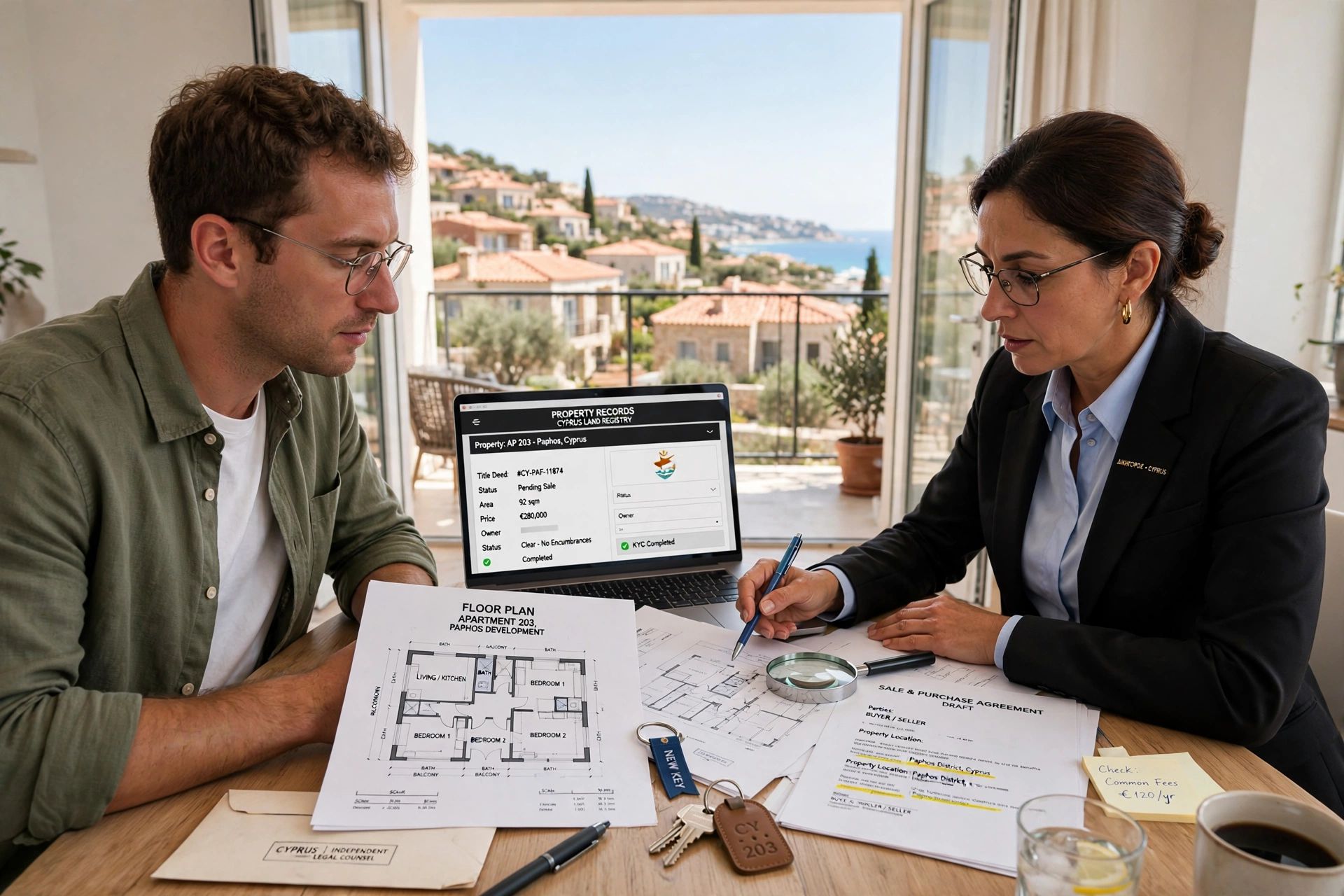
Searching for mortgages, liens, and other title encumbrances
Ask for current searches that identify mortgages, liens, or other restrictions affecting the property. A contract alone does not tell you whether another party has a claim or what must happen before transfer.
Confirming planning permission and building approvals
Check that planning and building approvals match the property as built, including later additions. If approvals or completion documents are missing, ask what that means for registration, use, and future changes.
Reviewing developer obligations for new-build properties
For a new build, read the specifications, payment milestones, completion terms, and procedures for defects. Confirm who is responsible for unfinished work and which documents you should receive at handover.
Assessing title and ownership risks in the northern part of Cyprus
Seek specialist legal advice before buying in the northern part of the island. Have the adviser investigate the ownership history, title documents, and potential claims; a local marketing description is not proof of secure ownership.
What to budget for beyond the purchase price
The agreed price is only one part of your budget. Fees and taxes depend on the transaction, property, and your circumstances, so obtain written estimates before making a commitment. Leave room for ongoing costs as well as one-time expenses.
Estimating transfer fees, VAT, and stamp duty
Ask your lawyer or tax adviser to confirm which transfer charges, VAT, or stamp duty may apply and how they are calculated for your purchase. Do not rely on a general estimate without checking the property and transaction details.
Planning for legal, survey, and registration costs
Budget for legal advice, any property survey, and registration-related expenses. Request fee estimates early and clarify which tasks are included, so you can compare the full cost of the purchase rather than just the headline price.
Comparing local mortgages with financing from abroad
If you need financing, compare local mortgage terms with borrowing in your home country. Check eligibility, currency exposure, fees, repayment conditions, and whether the lender’s timeline fits the sale contract.
Accounting for maintenance, insurance, and ongoing property charges
Estimate routine upkeep, insurance, shared-building charges, and utilities before choosing a property. For a home you will not occupy full-time, consider who will arrange inspections and respond to maintenance needs.
How buying property relates to residency and taxes
Buying a home and obtaining permission to live in a country are separate matters. Your plans may also affect tax, rental arrangements, and the practical work of maintaining a home from abroad. Get advice based on your nationality, intended length of stay, and how you will use the property.
Understanding why ownership does not automatically grant residency
Owning property does not by itself guarantee a right to reside in Cyprus. Check entry and stay rules separately, especially if you plan to spend extended periods there.
Exploring residence permit options for non-EU nationals
Non-EU nationals should ask an immigration adviser which residence routes may fit their circumstances and what evidence is required. Property ownership may be relevant to an application but does not alone establish eligibility.
Considering tax residency and rental income obligations
Tax residency depends on your circumstances, not simply on owning a home. If you plan to rent the property, ask a tax adviser about reporting, tax obligations, and records to keep in Cyprus and elsewhere.
Planning for utilities, property management, and long-term use
Before completion, plan how you will arrange utilities, maintenance, and access when you are away. A guide for non-resident buyers can help you consider purchase planning alongside financing, costs, and residence questions.

Anna Georgiou
Head of Client Relations
BERKOS is an integrated real estate group in Limassol, Cyprus, covering development, construction, property management and the legal and financial work around them.